
 HomeFlow
 Touch Stay
 Low6
Low6 Glasscubes
 Made (acq. by Next)
 PWN (acq. by PGi)
 Platinium Group
 Litera Microsystems
 Fortune 500 Firm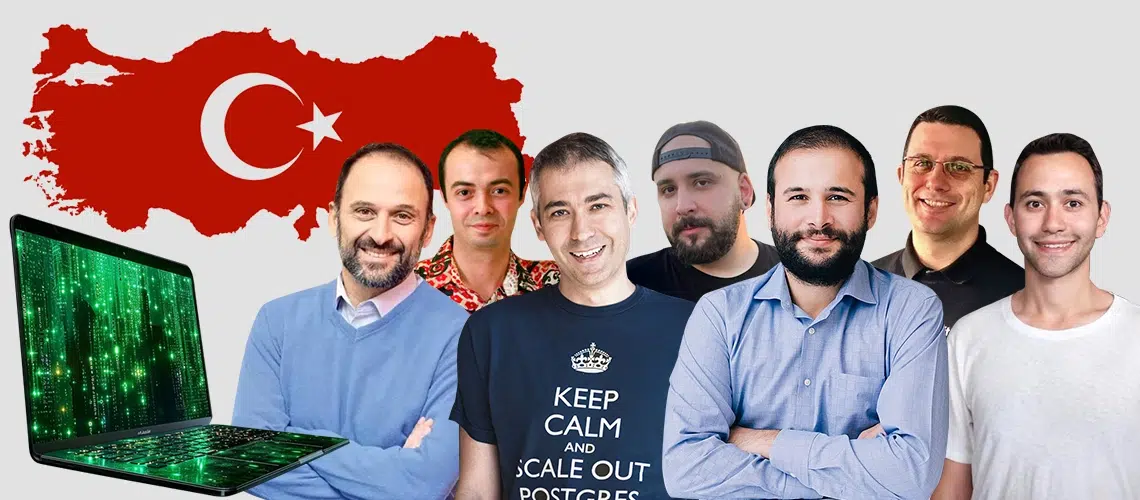
Turkish engineers run infrastructure at global tech companies and build unicorns at home. These are the names that come up when developers talk about the community’s best. Turkey’s tech talent is thriving, with developers making global impacts through open-source innovation, entrepreneurial ventures, community leadership, roles at top tech companies, and success in prestigious coding competitions.
Here is the updated and ranked list of the top software developers from Turkey, evaluated equally on their open-source contributions, startup leadership while still actively coding, influence in tech communities, impact at major tech companies, and achievements in international programming contests:
- Çağatay Çivici
- Fatih Arslan
- Eren Bali
- Orkut Büyükkökten
- Lemi Orhan Ergin
- Azer Koçulu
- Ahmet Alp Balkan
- Talip Ozturk
- Berkay Mollamustafaoğlu
- Özgün Erdoğan
- Emre Sokullu
- Armağan Amcalar
- Duru Özer
- Orhun Parmaksız
- Cetin Basoz
- Cem Paya
- Utku Şen
- Fatih Kadir Akın
⚡️Hiring developers in Turkey? EchoGlobal finds proven talent. Tell us about the role.
Each entry covers their background and key work, with links to their online profiles:
Cagatay Civici

The Next-Gen UI Component Library – Vuejs Amsterdam.
As founder and lead developer of the popular PrimeFaces UI library for JavaServer Faces, Çağatay put Turkey on the open-source map in enterprise Java.
He went on to create the PrimeNG, PrimeReact, and PrimeVue libraries, making rich UI components available across platforms. A recognized Java Champion, he has served on the JSF 2.x expert group and speaks internationally.
He is based in Ankara as CEO of PrimeTek, and the Prime libraries are used by thousands of developers worldwide.
- YouTube: Cagatay Civici
- Github: Cagatay Civici
Fatih Arslan
Fatih is the engineer behind vim-go, the ubiquitous Vim plugin for Go development.
A self-described “tool maker”, he has championed developer productivity in the Go ecosystem, amassing over 8.8K followers on GitHub. Fatih has worked at tech giants (previously GitHub and DigitalOcean, now at PlanetScale) and remains an active blogger sharing insights on software design.
He is based in Ankara.
- Linkedin: Fatih Arslan
- X (Twitter): @fatih
- Github: fatih
Eren Bali

Eren co-founded Udemy, the massive online learning platform, building it from an idea in Turkey into a Silicon Valley success.
As Udemy’s founding CEO, he helped grow it to over 150,000 courses, and in 2024 he returned as Udemy’s CTO to lead its next chapter. Eren also co-founded Carbon Health, a healthcare startup now valued over $2 billion.
Impressively, his journey began by winning a silver medal for Turkey at the International Mathematical Olympiad in 2001 and studying computer science at METU.
He still codes as a hands-on tech leader.
Orkut Buyukkokten
Orkut developed one of the first global social networks, the eponymous Orkut platform at Google, which connected over 300 million users at its peak.
A PhD in computer science from Stanford, Orkut also created early community sites (Club Nexus, inCircle) before Facebook existed. At Google he famously used his “20% time” to launch Orkut.com, which became a cultural phenomenon especially in Brazil and India.
Büyükkökten continues to work in social tech (he later founded the Hello Network).
- Linkedin: Orkut Büyükkökten
- X (Twitter): @orkut
Lemi Orhan Ergin
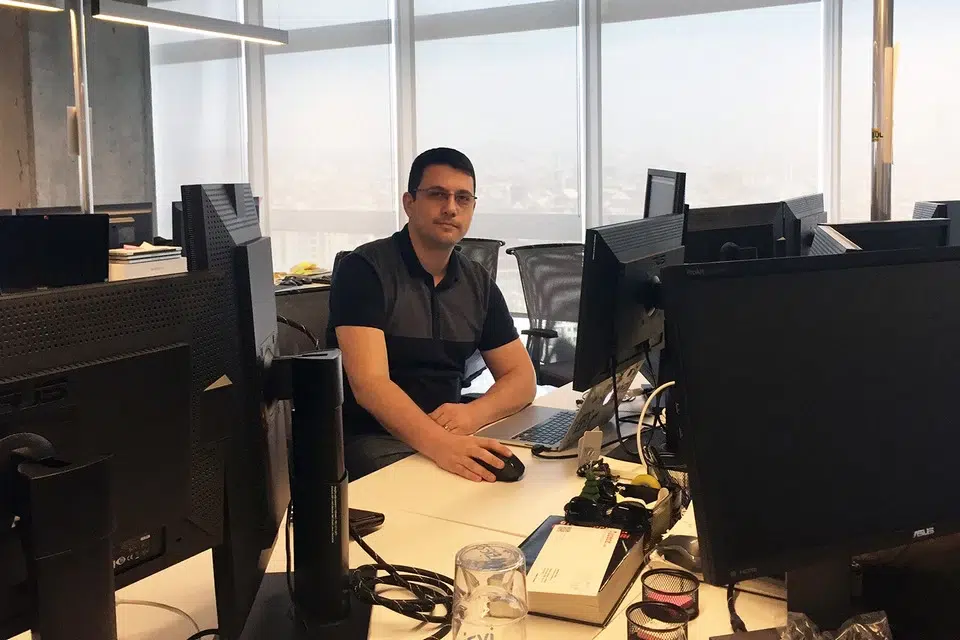
Lemi gained international fame in 2017 by discovering and publicly reporting a critical macOS High Sierra vulnerability: the notorious “root login” bug that allowed admin access with no password.
His responsible disclosure via Twitter prompted Apple to issue an emergency patch within 24 hours. In Turkey, Lemi leads the software craftsmanship movement: he co-founded the Turkish Software Craftsmanship community and mentors engineers on clean code and agile practices.
With over 20 years in industry, including engineering leadership roles, he bridges hands-on coding with high-level perspective.
- Linkedin: Lemi Orhan Ergin
- X (Twitter): @lemiorhan
Azer Koculu
Azer is an open-source developer best known for the 2016 “left-pad” incident that temporarily “broke the internet”.
Frustrated by a naming dispute, he boldly unpublished his tiny left-pad NPM package, which thousands of projects (including React and Babel) depended on, causing widespread build failures.
This incident forced NPM to change its policies and sparked industry discussions on the fragility of software supply chains. Beyond left-pad, Koçulu has authored many Node.js modules and continues to create developer tools.
- Linkedin: Azer Koçulu
- X (Twitter): @azerkoculu
- Github: azer
Ahmet Alp Balkan

Ahmet has made significant contributions to container and Kubernetes tooling, bridging the gap between developers and cloud platforms.
Early in his career at Microsoft Azure (as their first engineer to contribute to Docker), Ahmet helped improve Docker’s Windows support and co-developed the Azure Container Registry. He then joined Google Cloud, where he worked on Kubernetes and Cloud Run, focusing on developer experience.
Ahmet’s open-source tools, like kubectx (for fast K8s context switching) and krew (the kubectl plugin manager), are widely used by cloud-native developers. Now leading LinkedIn’s Kubernetes infrastructure team, he continues to write and speak actively about cloud technologies.
Balkan’s career spans Microsoft, Google, Twitter, and LinkedIn.
- Linkedin: Ahmet Alp Balkan
- X (Twitter): @ahmetb
- Github: ahmetb
- Website/Blog: Ahmet Alp Balkan
Talip Ozturk
Talip is the founder of Hazelcast, an open-source in-memory data grid used for high-performance caching and computing by enterprises worldwide.
In 2008, he wrote the first version of Hazelcast, pioneering an easy-to-use clustering solution for Java that rivaled offerings from larger companies. Under his technical leadership as CEO/CTO, Hazelcast grew into a global company and open-source project with a vibrant community.
Ozturk started out coding enterprise Java in Turkey in the late ’90s, and went on to present Hazelcast at QCon SF.
Today, Talip continues to build in cloud infrastructure (most recently founding Vectroid, an AI vector database).
- Linkedin: Talip Ozturk
- X (Twitter): @oztalip
- Github: talip
Berkay Mollamustafaoglu
The roller coaster ride can turn into a smooth chessboard. Just stay focused on what really matters and enjoy the ride.
Berkay is the entrepreneur-engineer who built OpsGenie, an IT incident alerting platform, from Ankara and led it to a $295 million acquisition by Atlassian in 2018.
As OpsGenie’s CEO (and a hands-on product architect), he scaled the company globally in just five years, making it one of Turkey’s largest tech exits. Before OpsGenie, he founded iFountain (another software venture) and gained deep expertise in IT monitoring and alerting.
Berkay’s focus on efficient on-call notification workflows and smooth integrations made OpsGenie a DevOps favorite. After the acquisition, he continues to give back to Turkey’s startup scene (as an investor and mentor) and has started new ventures (like Actioner).
- Linkedin: Berkay Mollamustafaoğlu
- X (Twitter): @endeavor_turkey
Ozgun Erdogan

Özgün is a co-founder and former CTO of Citus Data, the startup that created CitusDB, a scalable extension to PostgreSQL enabling distributed SQL across large data sets.
A Stanford PhD dropout, he teamed up with friends to found Citus in 2011, moving back to Istanbul to build the engineering team. Özgün’s vision was to “scale out a database without giving up SQL features”, which led to Citus’s groundbreaking approach of sharding PostgreSQL.
Under his technical leadership, CitusDB gained an open-source community and enterprise adoption, ultimately leading to Microsoft acquiring Citus Data in 2019. Post-acquisition, Erdoğan became Principal PM in Microsoft’s Azure database group, and later launched a new startup (co-CEO of Ubicloud in 2024).
Beyond database internals, he has mentored many engineers and trained Turkey’s Olympiad teams.
- Linkedin: Özgün Erdoğan
- X (Twitter): @ozgunerdogan_
Emre Sokullu
Emre made waves during the Web 2.0 era as founder of GROU.PS, a platform for creating your own social network communities.
Between 2008 and 2011, GROU.PS grew explosively to 8 million monthly users by offering user-friendly groupware tools. Emre led the company to profitability with a small team, raising $5M along the way.
Prior to that, he was involved in semantic search startup hakia and contributed articles to ReadWriteWeb. Emre’s tech journey started as an undergrad creating Turkix, a Turkish-language Linux distribution that was commercialized.
Today, he continues to innovate (recently in crypto and fintech) and shares insights on his blog.
- Linkedin: Emre Sokullu
- X (Twitter): @EmreSokullu
- Github: esokullu
Armagan Amcalar
Armağan is the founder of Coyotiv School of Software Engineering in Berlin, where he trains the next generation of developers with an emphasis on modern practices.
A full-stack software architect, he’s known in the Node.js world for creating cote (a popular Node.js microservices library) and other open-source projects. Armağan has over 20 years of coding experience, from Istanbul startups to leading engineering teams in Berlin.
He co-founded Startup Kitchen (an early Turkish incubator) and leads Lonca, a free coding bootcamp for women in Turkey. As a frequent conference speaker and Mozilla TechSpeaker alum, he has inspired many with talks on creative coding (even brain signal processing with JavaScript!).
- Linkedin: Armağan Amcalar
- X (Twitter): @dashersw_TR
- Personal Blog: Armağan Amcalar
Duru Özer

Duru made history in 2024 by becoming Turkey’s first female IOI gold medalist (and one of the country’s only IOI gold winners ever).
Competing against the world’s top high-school programmers, she clinched a gold medal at the International Olympiad in Informatics in Hungary, signaling a new era for Turkey in competitive programming.
Now an undergraduate at MIT, Duru continues to excel, but she also gives back, serving as an “Education Ambassador” for KızCode, a Turkish initiative to encourage girls in STEM. She previously won the European Girls’ Olympiad in Informatics as well.
Her path runs from a coding summer camp in İzmir to the global olympiad podium.
Her story is galvanizing more Turkish youth (especially young women) to pursue computer science and chase international accolades.
- Linkedin: Duru Özer
- X (Twitter): @duruozeer
Orhun Parmaksız
Orhun, a young developer from Turkey, has gained global recognition through his open-source projects in the Rust ecosystem.
He is the creator of git-cliff, a highly customizable changelog generator tool that has garnered over 8,300 GitHub stars and even won second place in an open-source competition for its code quality.
He’s an active member of the Rust community and also builds terminal tools (like kmon, gpg-tui, and more) for Linux. He describes himself simply as “an open-source developer with a deep passion for Rust”.
- Linkedin: Orhun Parmaksız
- Github: orhun
Cetin Basoz
Cetin is a FoxPro developer from Turkey, known for his contributions on Q&A forums and for building widely-used utilities. With decades of FoxPro experience, Cetin has developed advanced solutions for data export, Office integration, and performance optimization in VFP.
He created VFP2Excel, a popular library to export FoxPro data to Excel, often cited as the standard solution for that need.
Cetin has been a FoxPro MVP and was a top contributor on forums like UniversalThread, Foxite, and Stack Overflow, where he has a reputation of nearly 24k and has provided over a thousand answers (often complete with code) to FoxPro questions.
Colleagues credit him with deep knowledge of SQL querying and API integration in VFP; his techniques for calling Windows API or using .NET via COM in FoxPro are frequently referenced. Cetin’s dedication persisted even through personal trials.
- Linkedin: Cetin Basoz
Cem Paya
Cem was one of the earliest Turkish coding prodigies to make a mark in Big Tech.
In the 1990s, he represented Turkey in international programming contests (placing in the top 20 globally at ACM ICPC/IOI) and went on to study at Dartmouth. By 2000, he joined Google as a software engineer, part of the first wave of Turkish Googlers.
He later specialized in cybersecurity, serving as an information security engineer at Google focusing on cloud and identity systems. Cem then became Head of Security at Airbnb and Chief Information Security Officer at crypto exchange Gemini.
He’s also known for his technical writing; his Random Oracle blog and Medium posts demystify topics like two-factor authentication for developers.
- Linkedin: Cem Paya
- X (Twitter): @randomoracle
Utku Sen
Utku made global headlines in 2015 by creating “Hidden Tear” the first open-source ransomware prototype.
Intended as an educational project for security professionals, Hidden Tear’s code was nonetheless appropriated by real attackers, sparking a complex debate on disclosure ethics. Sen’s work, featured by Forbes and Business Insider, forced the cybersecurity community to confront the dual-use dilemma of open source.
Beyond this controversial fame, Utku is an accomplished security engineer who has developed defensive tools like ransomware honeypots (project “EDA2”) and contributed to open-source frameworks (e.g., Leviathan). He has presented at Black Hat Arsenal and is an active bug bounty hunter.
He now works in Turkey’s cybersecurity sector.
Fatih Kadir Akın
Fatih created awesome-chatgpt-prompts, one of the most-starred repositories on GitHub with over 140,000 stars, which grew into prompts.chat, a full platform for sharing AI prompts.
A front-end developer who worked at Turkish tech companies including Hepsiburada and Koding, he is now DevRel Manager at Teknasyon in Istanbul, a member of the GitHub Stars program, and the author of books on JavaScript and prompt engineering.
He also organised jstanbul, the first JavaScript conference held in Turkey, and has been a fixture of the local developer community for over a decade.
- Linkedin: Fatih Kadir Akın
- Github: f
How much do software developers make in Turkey?
Local salaries move with the lira, so most serious offers are quoted in dollars or euros. SalaryExpert puts the average local gross salary at about 1.56 million TRY per year, while Arc.dev reports remote Turkish developers averaging around $56,000 per year in 2026.
Contract rates cluster at $24 to $32 per hour for mid-level engineers and $35 to $50 for seniors. That pricing, plus a large STEM graduate pool, keeps Turkey on nearshoring shortlists for European companies.
Wrap Up
These experts represent exceptional talent, making them extremely challenging to headhunt. However, there are thousands of other highly skilled IT professionals in Turkey available to hire with our help. Contact us, and we will be happy to discuss your hiring needs.
Related reading: 10 Firms Choosing Turkey for Outsourcing.
Note: We’ve dedicated significant time and effort to creating and verifying this curated list of top talent. However, if you believe a correction or addition is needed, feel free to reach out. We’ll gladly review and update the page.