
IoT Software Development
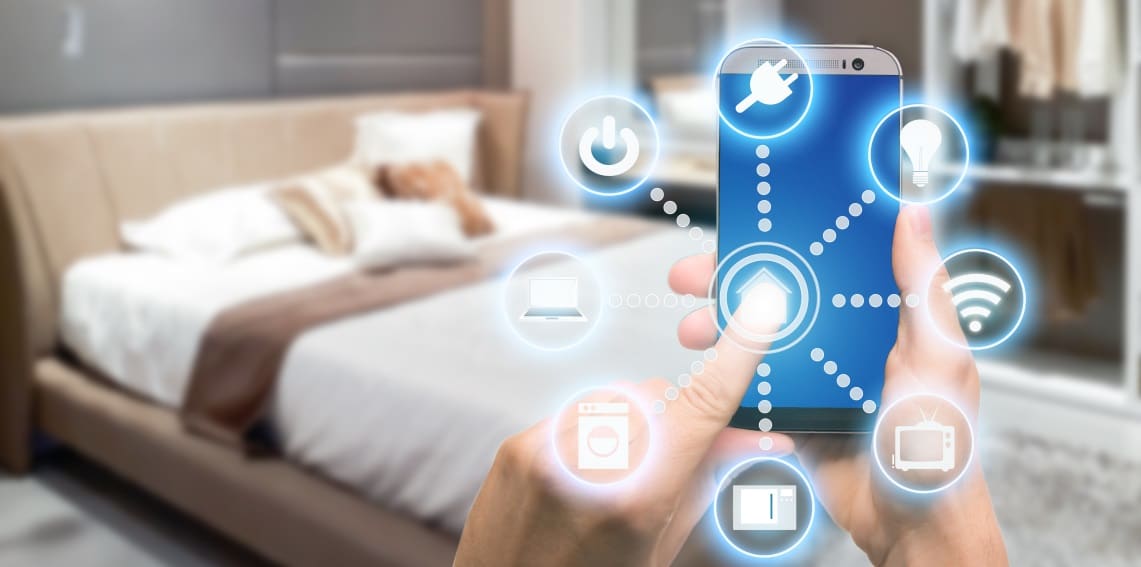
Our dev team delivers IoT software development services that transform your vision into reality, helping you harness the full potential of connected devices and smart systems. Get a quick quote!
“And just like any company that blissfully ignored the Internet at the turn of the century, the ones that dismiss the Internet of Things risk getting left behind.” — Jared Newman
What Connected-Device Engineering Demands Today
IoT engineering has matured past the “smart toaster” caricature, working at the intersection of embedded firmware, edge computing, cloud platforms, and strict device security. Embedded is the foundation: firmware in C, C++, and increasingly Rust for ARM Cortex-M, RISC-V, and ESP32 targets, under hard memory, power, and timing limits, shipping with signed OTA updates, secure-boot chains, and ten-year patching.
The protocol layer is where IoT diverges from regular networking: MQTT and CoAP for messaging, LoRaWAN, NB-IoT, and LTE-M for low-power wide-area links, Matter and Thread for consumer interoperability. Edge computing is the second center of gravity, pushing ML inference and protocol translation onto gateways via AWS IoT Greengrass and Azure IoT Edge.
Regulation (the EU Cyber Resilience Act, the US Cyber Trust Mark, IEC 62443) has made device security a compliance gate. The IoT engineers profiled below have shipped in industrial automation, connected-home, automotive telematics, and smart-city deployments.
Today’s IoT Industry Challenges
- Security vulnerabilities in connected device networks
- Complex integration with legacy systems
- Scalability issues as device networks grow
- Data management and privacy concerns
- Interoperability between different IoT platforms
- Power consumption and battery life optimization
- Real-time data processing demands
🧐 What’s your biggest challenge right now? Let’s dive in!
The Right Development Company for Your IoT Project
When choosing a partner for Internet of Things development, look for:
- Proven expertise in embedded systems
- Strong background in cloud computing
- Experience with various communication protocols
- Understanding of hardware-software integration
- Knowledge of data security best practices
- Scalable solution architecture capabilities
- Cross-platform development skills

Team Augmentation
Gaining access to more technical talent and the ability to scale flexibly are crucial for businesses aiming to innovate and succeed with their software products. Even if you have a well-defined project roadmap and a strong core team, additional dev resources can help you achieve your goals faster. We offer smooth integration at any stage of your software development life cycle.
📱Need talent to build a custom app solution? Send us a message and we’ll get started.
IoT Software Projects our Developers can Build
- Smart home automation systems
- Connected healthcare monitoring platforms
- Industrial IoT (IIoT) control systems
- Intelligent transportation solutions
- Smart city infrastructure management
- Agricultural monitoring systems
- Energy management platforms
- Retail inventory tracking solutions
👨💻 Expand your team with software engineers skilled in IoT solutions.
Pros and Cons of IoT Software Modernization
IoT software modernization offers enhanced security features and improved device performance through updated protocols and frameworks, though it often requires significant upfront investment. While modernization enables better data analytics and smooth integration with newer technologies, organizations may face compatibility issues with legacy systems and need to manage potential service disruptions during the upgrade process.
Advantages
- Enhanced operational efficiency
- Real-time data insights
- Improved customer experience
- Reduced maintenance costs
- Predictive maintenance capabilities
- Better resource utilization
- Competitive market advantage
Challenges
- Initial implementation costs
- Training requirements
- System downtime during transition
- Potential security risks
- Integration complexity
- Hardware compatibility issues
IoT App Development Technologies

Our connected device solutions use:
- Cloud Platforms: AWS IoT, Azure IoT Hub, Google Cloud IoT
- Protocols: MQTT, CoAP, AMQP
- Programming Languages: Python, Java, C++, JavaScript
- Frameworks: Node-RED, Arduino, React Native
- Security: SSL/TLS, OAuth 2.0, PKI
- Analytics: TensorFlow, Apache Spark
- Databases: MongoDB, InfluxDB, PostgreSQL
🚀 Great technology needs greater minds – build your dream team today!
Examples of Outstanding and Innovative IoT Software
ThingsBoard
An open-source IoT platform for data collection, processing, visualization, and device management. It supports various protocols including MQTT, CoAP, and HTTP, and offers both cloud and on-premises deployment options with features like real-time analytics, customizable dashboards, and rule-based automation for enterprise-grade IoT solutions.
Kaa IoT

A multi-purpose middleware platform for IoT that enables device management, data collection, and visualization for connected devices. It provides flexible microservice architecture, supports multiple communication protocols, and includes features like end-to-end data encryption, device provisioning, and configurable data analytics.
Node-RED
A flow-based programming tool originally developed by IBM for wiring together hardware devices, APIs, and online services. It provides a browser-based editor where users can connect IoT devices and services using a visual programming approach, making it particularly popular among hobbyists and for rapid prototyping of IoT solutions.
AI in IoT
Artificial Intelligence amplifies the power of connected ecosystems through:
- Predictive maintenance
- Anomaly detection
- Pattern recognition
- Automated decision-making
- Natural language processing
- Machine learning optimization
- Edge computing intelligence
🤖 Supercharge your operations with AI solutions. Book a consultation.

The Future of IoT
The Internet of Things landscape continues to evolve with emerging trends:
- 5G integration
- Edge computing advancement
- Blockchain integration
- Extended reality (XR) convergence
- Sustainable IoT solutions
- Quantum computing applications
- Autonomous systems
- Biometric authentication
Best IoT Recruiters Connecting Smart Industry Experts
Partner with Us
Ready to embark on your Internet of Things journey? Our team of experienced developers, solution architects, and IoT specialists is here to guide you through every step of your project.
Contact us today to discuss how we can turn your connected device vision into reality.
What Our Clients Say
Clients praise tailored software solutions delivered by our values-driven product teams, emphasizing open communication and close collaboration. Testimonials highlight satisfaction with agile, iterative development – including MVP software and integrated QA processes.
Alternative Companies to Work With
Cogniteq
A specialized IoT development firm that is known for its comprehensive approach to Internet of Things solutions. They provide custom IoT software development services with a particular focus on industrial automation, smart home systems, and healthcare IoT implementations.
Vention
A notable player in the IoT space that has carved out a unique position by focusing on specific sectors including consumer, enterprise, industrial, and wellness. Their strength lies in creating sophisticated IoT solutions that bridge the gap between hardware and software, with particular expertise in data analytics and real-time monitoring systems for industrial applications.
The NineHertz
An innovative IoT development company that specializes in creating custom IoT solutions for businesses across various sectors. Their portfolio includes successful implementations of smart city projects, industrial automation systems, and connected device networks. They’re particularly known for their expertise in developing scalable IoT architectures that can handle large amounts of sensor data.
Related Industries
Frequently Asked Questions
IoT engineers build applications that connect sensors, gateways, and cloud platforms, covering data integration, real-time monitoring, and security.
Common platforms include AWS IoT Core, Azure IoT Hub, Google Cloud IoT, and Eclipse IoT, handling communication, analytics, and device security.
Budgets typically range from 60,000 to 200,000 USD, with large device fleets or industrial systems costing more.
Modern OTA pipelines sign firmware with hardware-rooted keys (secure element or TPM), deliver updates over MQTT or HTTPS, and verify signatures during a secure-boot transition. Phased rollouts (canary, then percentage-based) catch failed updates before they reach the whole fleet, and rollback paths (A/B partitions or known-good fallback) are mandatory for devices that cannot be reached after a bricking update.
MQTT is the default for cellular or Wi-Fi devices that hold a persistent TCP session: efficient, broker-mediated pub-sub. CoAP suits constrained devices over UDP with intermittent connectivity, including 6LoWPAN mesh. LoRaWAN fits ultra-low-power, long-range, low-bandwidth uses (utility meters, agricultural sensors) where batteries last years on tiny packets.
The EU Cyber Resilience Act (effective late 2027) requires manufacturers selling IoT products in the EU to use secure-by-design practices, provide free security updates for the product lifetime (5 years minimum), publish SBOMs (Software Bill of Materials), and disclose actively exploited vulnerabilities within 24 hours. It formalizes common practice but adds significant compliance documentation.