
 HomeFlow
 Touch Stay
 Low6
Low6 Glasscubes
 Made (acq. by Next)
 PWN (acq. by PGi)
 Platinium Group
 Litera Microsystems
 Fortune 500 Firm
Computer vision has transformed from a niche academic field into one of the most important pillars of modern self-driving cars, medical diagnostics, augmented reality, robotics, and more.
This revolution wouldn’t be possible without a group of visionaries who built the foundations of today’s image recognition, segmentation, and generative models. The list below features some of the most influential computer vision developers in the world: from creators of ResNet, R-CNN, and YOLO to leaders behind PyTorch, OpenCV, and the MS COCO dataset.
| # | Expert | Field |
|---|---|---|
| 1 | Kaiming He | Computer vision research |
| 2 | Christian Szegedy | CNN architectures |
| 3 | Ross Girshick | Object detection |
| 4 | Phillip Isola | Generative vision |
| 5 | Soumith Chintala | PyTorch, deep learning |
| 6 | Glenn Jocher | AI accessibility |
| 7 | Adrian Rosebrock | Computer vision education |
| 8 | Tsung-Yi Lin | Vision research |
| 9 | Satya Mallick | Computer vision |
| 10 | Gary Bradski | OpenCV, computer vision |
| 11 | Jitendra Malik | Computer vision research |
| 12 | Deva Ramanan | Vision, machine learning |
| 13 | Vitor Mesquita | Computer vision in logistics |
| 14 | Alexey Bochkovskiy | YOLOv4 |
⚡️Hiring Computer Vision engineers? EchoGlobal finds proven talent for your team.
Now, let’s dig into their achievements and contributions:
Kaiming He

🇨🇳 Chinese
Kaiming is an MIT professor and former Facebook AI Research scientist.
He is best known for inventing ResNet (2015), whose deep residual networks enabled much higher accuracy in image recognition. Kaiming also co-authored Mask R-CNN and other state-of-the-art CV architectures. His publications have over 500k citations. He won multiple CVPR/ICCV awards and the Everingham Prize for open-source impact.
Kaiming remains active in research and open sourcing new models (e.g. self-supervised vision).
- Linkedin: Kaiming He
- Github: KaimingHe
Christian Szegedy
🇵🇱 🇺🇸 Polish-American
Christian is the Chief Scientist of Morph Labs (previously at Google and xAI), known for pioneering CNN architectures.
He co-created the Inception (GoogLeNet) models that achieved top accuracy on ImageNet. The 2014 Inception paper reported new state-of-the-art results using much deeper and wider networks. Szegedy’s work introduced ideas like inception modules and batch normalization that are now standard in CV.
He actively develops vision models and optimization techniques at Google Research, influencing many subsequent neural network designs.
- Linkedin: Christian Szegedy
- X (Twitter): @ChrSzegedy
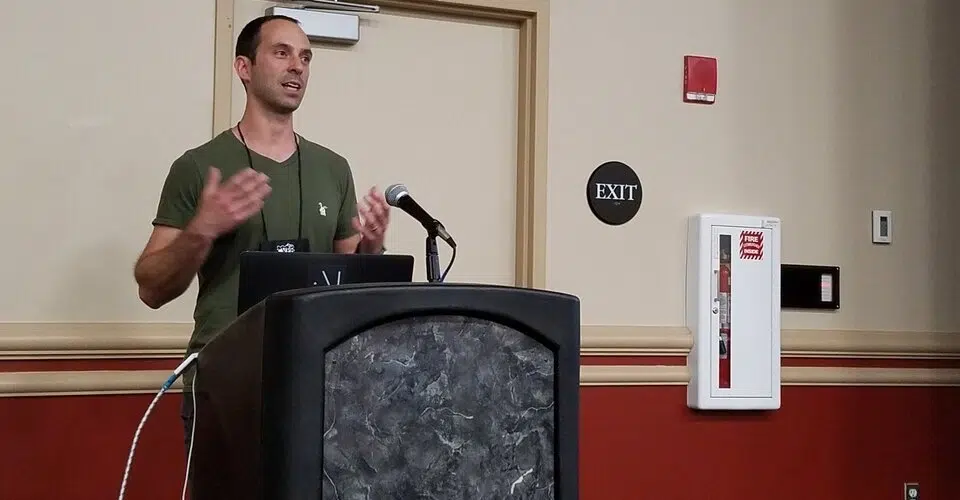
Ross Girshick
🇺🇸 American
Ross is a principal scientist at Meta AI (Facebook) and co-inventor of the R-CNN object detection family.
His papers on R-CNN, Fast/Faster R-CNN and Mask R-CNN reshaped object recognition and instance segmentation. Ross also led development of Detectron/Detectron2 (Facebook’s open vision libraries). His work has over 500k citations, earning multiple test-of-time awards.
Girshick drove CV innovation at FAIR for years before leaving Meta in 2024; he later co-founded the startup Vercept, now part of Anthropic.
- Linkedin: Ross Girshick
- X (Twitter): @inkynumbers
- Github: nrbgirshick
Phillip Isola
🇺🇸 American
Phillip is an MIT professor known for generative vision techniques.
He led the creation of pix2pix and CycleGAN (CVPR 2017) for image-to-image translation, learning mappings (e.g. maps→photos, edges→objects) without paired data. His pix2pix framework became widely adopted in art and graphics applications. Isola continues to explore novel vision models (e.g. self-supervised translation) and teaches computer vision courses at MIT. His open-source code for GAN-based vision tasks is heavily used by researchers and artists alike.
- Linkedin: Phillip Isola
- X (Twitter): @phillip_isola
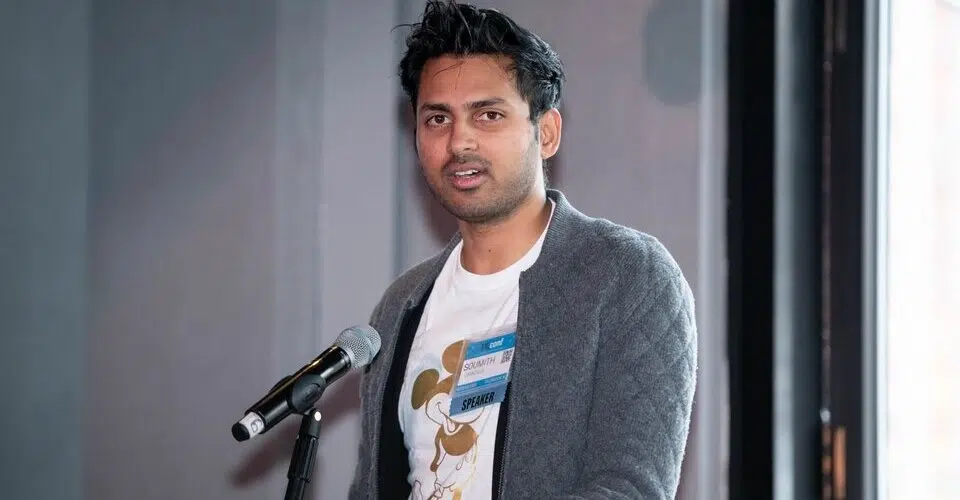
Soumith Chintala
🇮🇳 🇺🇸 Indian-American
Soumith co-founded the PyTorch framework (with Adam Paszke) and was an early maintainer of Torch7.
As Meta AI (FAIR) research engineer and NYU affiliate, he built many low-level CV tools and benchmarks. His open-source work (Torch-7, PyTorch, convnet-benchmarks) is now standard for vision research. Soumith regularly contributes to the PyTorch repo and other ML libraries (e.g. torchvision).
He continues coding in AI infrastructure, making modern CV development much more accessible.
- Linkedin: Soumith Chintala
- X (Twitter): @soumithchintala
- Github: soumith
Glenn Jocher
AI shouldn’t be locked behind complexity. If it’s not easy to use, it won’t be used.
🇺🇸 American
Glenn Jocher is the founder of Ultralytics and the lead developer of YOLOv5 and YOLOv8 object detectors.
These PyTorch-based YOLO models are known for real-time performance and ease of use in object detection and segmentation. Jocher continuously updates the open-source YOLO repositories with new layers and optimizations. He has enabled millions of engineers to train custom vision models quickly.
His contributions (code + tutorials) keep YOLO among the most popular tools in CV.
- Linkedin: Glenn Jocher
- X (Twitter): @GlennJocher
- Github: glenn-jocher
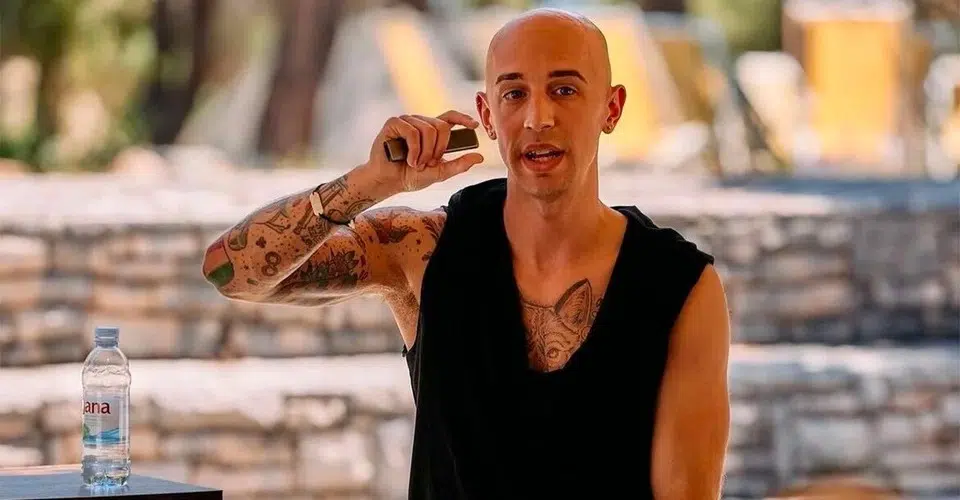
Adrian Rosebrock
🇺🇸 American
Adrian is the founder of PyImageSearch, a top computer vision blog and training platform.
He has written 9 books and over 500 tutorials on AI and deep learning. Adrian’s PyImageSearch courses teach thousands of developers how to build CV applications (face recognition, object detection, etc.). He consults for industry clients on vision projects and now runs StrategyGroup.ai (AI consulting) while still coding.
His focus on practical CV pipelines and clear guides has made him an influential educator in the field.
- Linkedin: Adrian Rosebrock
- X (Twitter): @InfoProdMastery
- Github: jrosebr1
Tsung-Yi Lin
🇹🇼 🇺🇸 Taiwanese-American
Tsung-Yi is a research scientist (formerly Google Brain, now NVIDIA) specializing in vision.
He co-led the creation of the MS COCO dataset, winning the PAMI Everingham Prize. Lin also co-authored Focal Loss (RetinaNet) and RetinaNet models that advanced object detection. His EfficientDet/EfficientNet work (with Mingxing Tan) achieved higher accuracy with much smaller models.
With ~150k citations, Lin’s open code and datasets (COCO, FPNs) are widely used foundations in the vision community.
- Linkedin: Tsung-Yi Lin
- X (Twitter): @TsungYiLinCV
- Github: tylin
Satya Mallick
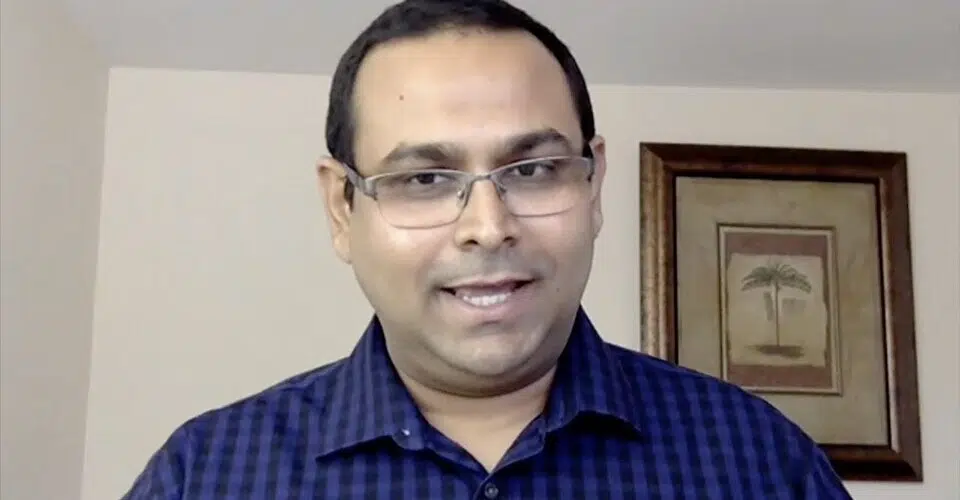
🇮🇳 🇺🇸 Indian-American
Satya holds a PhD in computer vision and co-founded Taaz (a fashion/beauty AI startup).
He is now CEO of OpenCV.org and runs LearnOpenCV.com, providing in-depth tutorials and code for CV and deep learning. Satya has authored hundreds of blog posts, videos, and an OpenCV book, educating developers on image recognition and neural networks. He also oversees OpenCV’s training courses and contributed to open-source CV tools.
His efforts have made advanced vision techniques easy to learn and use by practitioners worldwide.
- Linkedin: Satya Mallick
- X (Twitter): @LearnOpenCV
- Github: spmallick
Gary Bradski
🇺🇸 American
Gary co-authored the original OpenCV library and wrote Learning OpenCV (2016).
He led Intel’s vision R&D for many years and later worked at Magic Leap on augmented reality vision. Gary also co-founded Industrial Perception (acquired by Google). He continues to influence CV through Magic Leap’s research and in-depth blog posts and talks.
His longstanding contributions to real-time computer vision and educational resources have made him a key figure for developers learning and using CV technologies.
- Linkedin: Gary Bradski
- X (Twitter): @grbradsk
- Github: garybradski
Jitendra Malik
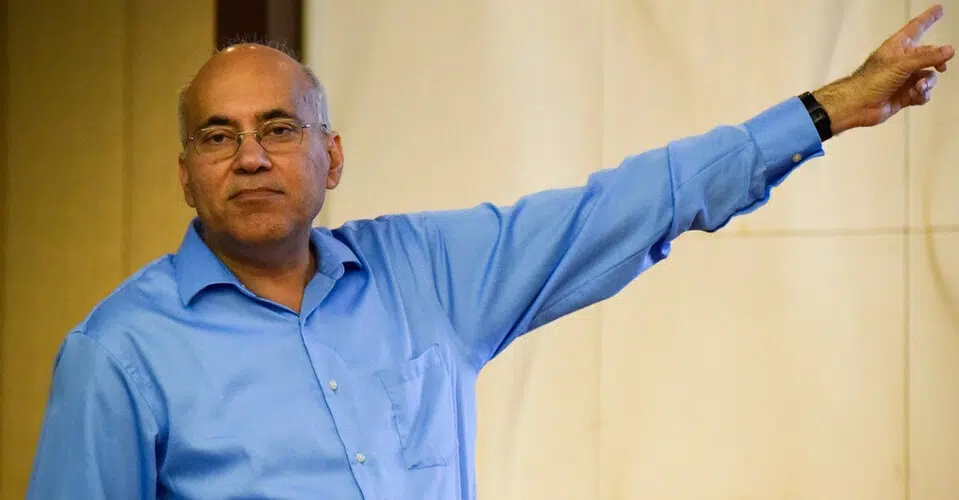
🇺🇸 American
Jitendra is a senior professor at UC Berkeley and a pioneer of computer vision research.
His lab invented classic algorithms (e.g. normalized cuts, anisotropic diffusion) and tackled shape modeling and segmentation. He co-authored the 2010 R-CNN work and has mentored many top vision researchers (Girshick, Hariharan, etc.). Malik’s papers have earned numerous test-of-time awards, reflecting the lasting impact of his methods.
He continues to publish and guide vision projects, bridging low-level image analysis and high-level recognition.
- Linkedin: Jitendra Malik
- X (Twitter): @JitendraMalikCV
Vitor Mesquita
🇧🇷 Brazilian
Vitor is a data science professional with a strong focus on applying Computer Vision and Python to optimize logistics and operational processes.
As Research and Operational Development Coordinator at Correios, he leads innovation projects using technologies such as Machine Learning, ETL, and Power BI. His article, Python for Computer Vision: A Beginner’s Guide, introduces newcomers to the practical uses of Python in extracting insights from visual data. Passionate about continuous learning, Vitor is advancing his expertise through an MBA in Data Science and Analytics at the “Luiz de Queiroz” School of Agriculture.
- Linkedin: Vitor Mesquita
Deva Ramanan
🇺🇸 American
Deva is a professor at Carnegie Mellon specializing in vision and machine learning.
His research includes object detection, human pose estimation, and active vision. He developed early deformable part models and deep learning methods for people detection, and more recently works on self-driving vision and learning from small data. A highly cited CV researcher (115k+ citations), Ramanan actively releases code and data for his algorithms.
His lab’s models are used in many vision benchmarks, and he continues to innovate in practical vision systems.
- X (Twitter): @RamananDeva
Alexey Bochkovskiy
Alexey is an independent computer vision researcher and lead author of YOLOv4.
YOLOv4 introduced architectural and training improvements (CSPDarknet, mosaic augmentation, CIoU loss) that significantly improved accuracy while maintaining real-time performance. The model became one of the most widely adopted object detectors in production systems before the PyTorch YOLO era.
Bochkovskiy’s work focused on practical optimization rather than new theory, making advanced detection accessible on consumer GPUs.
- Linkedin: Alexey Bochkovskiy
- X (Twitter): @alexeyab84
- Github: AlexeyAB
Wrap Up
These experts represent exceptional talent, making them extremely challenging to headhunt. However, there are thousands of other highly skilled IT professionals available to hire with our help. Contact us, and we will be happy to discuss your hiring needs.
Note: We’ve dedicated significant time and effort to creating and verifying this curated list of top talent. However, if you believe a correction or addition is needed, feel free to reach out. We’ll gladly review and update the page.