
 HomeFlow
 Touch Stay
 Low6
Low6 Glasscubes
 Made (acq. by Next)
 PWN (acq. by PGi)
 Platinium Group
 Litera Microsystems
 Fortune 500 Firm
Artificial Intelligence is evolving fast, and a small group of world-class AI experts, engineers and researchers drives its progress: open-source visionaries, generative-AI pioneers, hands-on startup founders, influential educators, and corporate research leaders.
How we chose: everyone on this list has been active in the past 18 months and has verifiable, field-shaping impact. The mix spans research, open source, education, investment, and policy.
Here is our curated list of the top 20 AI experts in the world, spanning generative AI, machine-learning research, and open-source innovation. Below is a quick-reference table, followed by each expert’s full background:
| # | AI Expert | Field |
|---|---|---|
| 1 | Demis Hassabis | AI research, AGI |
| 2 | Andrew Ng | Machine-learning education |
| 3 | Fei-Fei Li | Computer vision, research |
| 4 | Andrej Karpathy | Deep learning, education |
| 5 | Connor Leahy | Open-source LLMs, AI safety |
| 6 | Emad Mostaque | Generative AI |
| 7 | Gary Marcus | AI research, critique |
| 8 | Thomas Wolf | Open-source, generative AI |
| 9 | Soumith Chintala | Deep learning (PyTorch) |
| 10 | Francois Chollet | Deep-learning frameworks |
| 11 | Kai-Fu Lee | AI strategy, investment |
| 12 | Timnit Gebru | AI ethics |
| 13 | Daphne Koller | Machine learning, biotech |
| 14 | Dario Amodei | Generative AI, safety |
| 15 | Mira Murati | Generative AI |
| 16 | Mustafa Suleyman | AI products, policy |
| 17 | Abhishek Thakur | ML engineering (Kaggle) |
| 18 | Gabriel Lazaro | Applied AI (insurance) |
| 19 | Oriol Vinyals | Deep-learning research |
| 20 | Yoshua Bengio | Deep-learning research |
⚡️Hiring AI engineers? EchoGlobal finds proven talent for your team.
Now, let’s explore their careers and contributions:
1. Demis Hassabis

🇬🇧 British
Demis is a British AI researcher and entrepreneur, best known as the co-founder and CEO of DeepMind (now Google DeepMind after its merger with Google’s Brain team).
A former child chess prodigy and neuroscientist, Hassabis has spearheaded AI breakthroughs like AlphaGo, which made history by defeating the world Go champion in 2016, and AlphaFold, which cracked the problem of protein folding. Under his leadership, DeepMind’s work spans from games to scientific research, pushing toward artificial general intelligence.
Hassabis still co-authors DeepMind papers while steering one of the world’s premier AI labs, and he often discusses how games and neuroscience inspire the development of advanced AI.
In 2024 he was knighted and shared the Nobel Prize in Chemistry (with John Jumper) for AlphaFold and protein-structure prediction.
- Linkedin: Demis Hassabis
- X (Twitter): @demishassabis
2. Andrew Ng
Worrying about evil AI killer robots today is a little bit like worrying about overpopulation on the planet Mars.
🇬🇧 🇺🇸 British-American
Andrew is an AI pioneer and educator who has helped make AI knowledge accessible worldwide.
As the co-founder of Google Brain, he was early to show how large-scale deep learning (with projects like the “Google cat detector”) could reshape AI. He also co-founded Coursera, enabling millions to learn machine learning, and served as Chief Scientist at Baidu, where he built an industrial-scale AI research lab.
Famous for saying “AI is the new electricity” to describe its transformative power, Ng now focuses on democratizing AI through his ventures DeepLearning.AI and Landing AI, emphasizing a data-centric approach to model development.
He continues to teach (his online ML courses are among the world’s most popular) and to lead projects bringing AI into sectors like manufacturing and healthcare.
- Linkedin: Andrew Ng
- X (Twitter): @AndrewYNg
- Website/Blog: andrewng.org
3. Fei-Fei Li
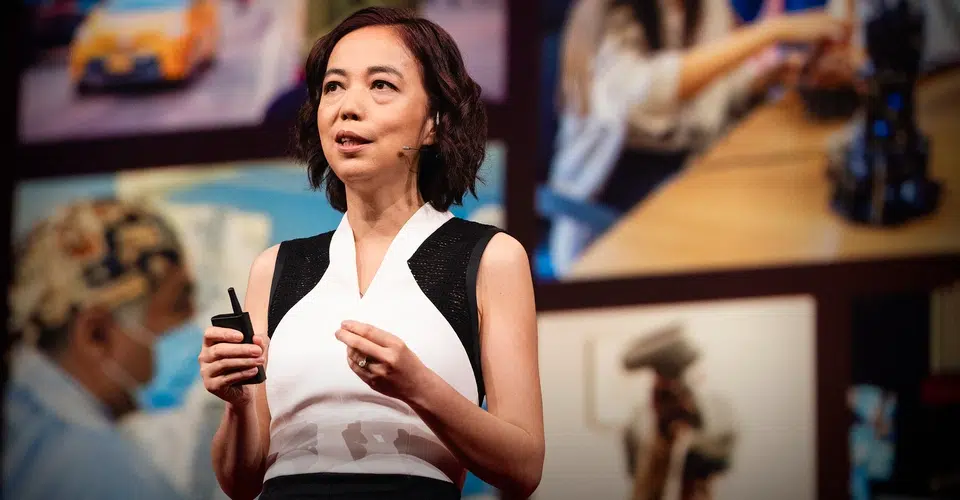
🇨🇳 🇺🇸 Chinese-American
Fei-Fei is a computer scientist known for her crucial contributions to computer vision and for advocating “human-centered AI”.
As a professor at Stanford University, she led the creation of ImageNet, the massive image database that enabled groundbreaking advances in deep learning for vision when it fueled the Imagenet Challenge.
Fei-Fei Li also served as Chief Scientist of AI at Google Cloud (2017–2018), bridging academia and industry. Currently, she co-directs the Stanford Institute for Human-Centered AI (HAI), promoting AI research that is guided by ethical and societal considerations.
A strong advocate for diversity in tech, she founded AI4ALL to encourage underrepresented youth to engage in AI. In 2024 she launched World Labs, a startup building spatial-intelligence models for the 3D world.
- Linkedin: Fei-Fei Li
- X (Twitter): @drfeifei
4. Andrej Karpathy
Neural networks are basically just fancy math functions with millions of parameters. But they can do amazing things if you train them right.
🇸🇰 Slovakian
Andrej is a computer scientist who has become a popular figure in AI for both his technical contributions and his ability to communicate complex ideas. Formerly the Director of AI at Tesla, Karpathy led the vision and autonomous driving efforts, applying deep learning to real-world robotics at scale.
He was also one of OpenAI’s early researchers and rejoined OpenAI in 2023, then left in February 2024 to launch Eureka Labs (an AI education company), and in May 2026 joined Anthropic to lead pretraining research.
Andrej made his name in AI education: he taught Stanford’s famed CS231n course on Convolutional Neural Networks and wrote insightful blog posts (like “The Unreasonable Effectiveness of Recurrent Neural Networks”) that have influenced many budding AI engineers.
With a large following on social media, he bridges research and practice, often sharing code, tutoring (e.g., through char-rnn and microGPT projects), and championing open science in AI.
- X (Twitter): @karpathy
- Github: karpathy
- Website/Blog: karpathy.ai
5. Connor Leahy
🇩🇪 🇺🇸 German-American
Connor is an AI researcher and engineer who has become a prominent advocate for open-source AI and AI alignment. He first gained recognition through EleutherAI, the volunteer research collective he co-founded, which replicated large language models (like GPT-Neo/GPT-J) and released them to the public.
Building on that ethos, Leahy founded Conjecture, a startup focused on AI alignment research, aimed at keeping future AI systems safe and aligned with human values.
Connor presses the AI community on transparency and cooperation in AI development, warning about the long-term risks of uncontrolled AGI. Despite tackling these big-picture challenges, he remains very much a builder at heart, contributing to code and research.
Peers see him as a young leader bridging practical AI development with the imperative of ethics and safety.
- Linkedin: Connor Leahy
- X (Twitter): @NPCollapse
- Github: ConnorJL
6. Emad Mostaque
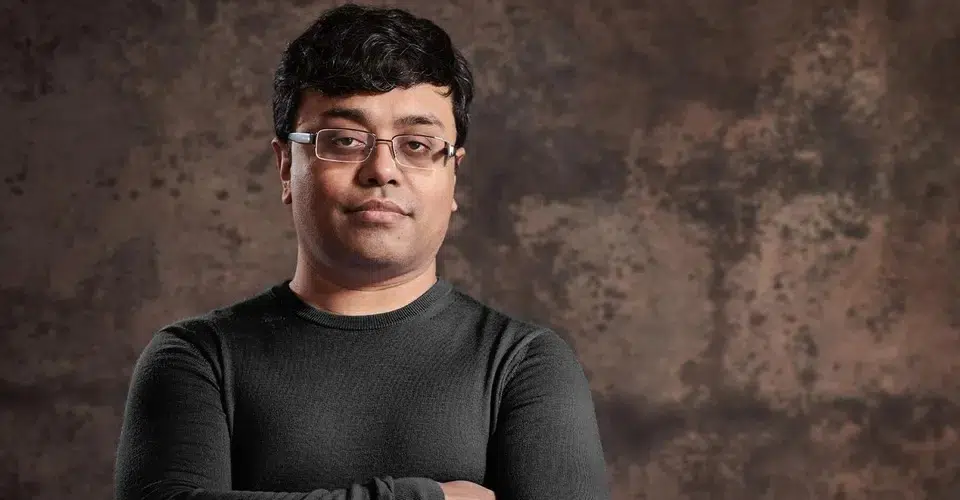
🇬🇧 British
Emad is an entrepreneur who has become a leading voice in the open-source AI movement. He is the founder and former CEO of Stability AI (he stepped down in March 2024), the startup behind Stable Diffusion, which in 2022 made waves as an open-source text-to-image generation model challenging proprietary offerings.
Emad, originally a hedge fund manager turned tech founder, raised substantial funding to support open AI research and released generative AI tools to the public, stressing the importance of transparency and community collaboration. Under his leadership, Stability AI has helped spawn a vibrant ecosystem of AI image and text generation projects.
Mostaque continues to champion the idea of “AI by the people, for the people”, engaging with developers online and pushing for decentralized, global participation in AI development.
- Linkedin: Emad Mostaque
- X (Twitter): @EMostaque
7. Gary Marcus
🇺🇸 American
Gary is an American cognitive psychologist, author, and entrepreneur who has become one of AI’s most prominent skeptics. A professor emeritus at NYU, Marcus has long argued that robust AI will require integrating neural networks with symbolic reasoning, reflecting the strengths of human cognition.
He founded Geometric Intelligence, a machine learning startup acquired by Uber, and has written bestselling books including “Rebooting AI”, which critiqued the deep-learning-centric approach of recent AI and outlined paths toward more reliable AI.
In 2023 and 2024, Marcus’ influence grew as he became a key commentator on generative AI’s shortcomings and risks, speaking at venues like the U.S. Congress and the UN. He runs a popular Substack newsletter and frequently engages in public debates (often sparring with AI optimists) to push for AI systems that can reason, generalize, and understand causality better.
Love him or not, Marcus’ contrarian perspective challenges the AI community to address blind spots and strive for more trustworthy AI.
- Linkedin: Gary Marcus
- X (Twitter): @GaryMarcus
8. Thomas Wolf
🇫🇷 French
Thomas is a French computer scientist and co-founder of Hugging Face, a company and open-source community that has democratized access to NLP and transformer models.
As Chief Science Officer at Hugging Face, Wolf has overseen the development of the Transformers library, which has become a standard toolkit for developers working with large language models and other AI models. He is an educator and communicator, breaking down complex AI topics in blogs and talks, and has been instrumental in campaigns for responsible AI (such as supporting model evaluation and bias detection).
Thomas holds a PhD in statistical physics and combines academic insight with practical coding, often contributing code himself.
He remains a key connector in the AI world, collaborating with industry and academia to promote an open, inclusive approach to AI technology.
- Linkedin: Thomas Wolf
- X (Twitter): @thom_wolf
- Github: thomwolf
9. Soumith Chintala
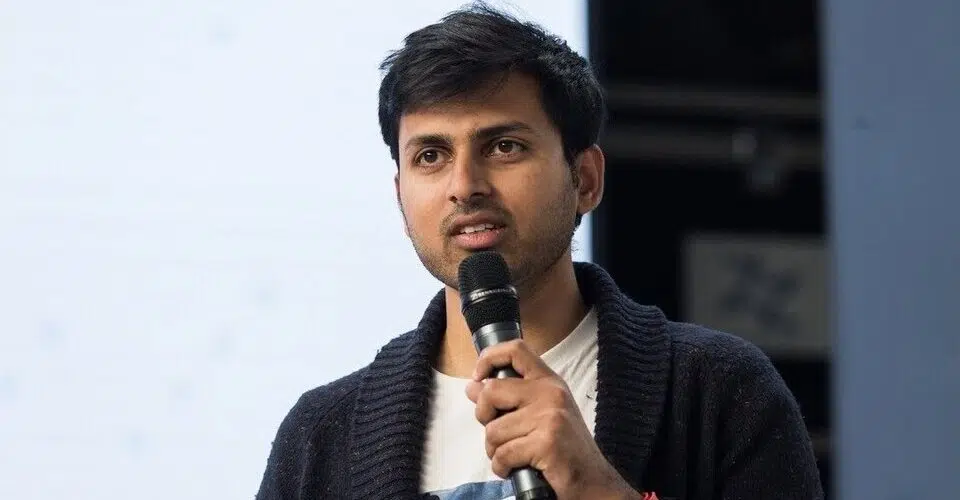
🇮🇳 Indian
Soumith is a software engineer known for co-creating PyTorch, one of the world’s most popular open-source deep learning frameworks.
Chintala spent more than a decade at Meta AI (Facebook), where he was instrumental in PyTorch’s development from its early days (building on the Torch library) to its widespread adoption by researchers and engineers alike. In November 2025 he left Meta to become Chief Technology Officer of Thinking Machines Lab.
PyTorch’s eager execution and flexible design, shaped in part by Soumith’s vision, helped accelerate research breakthroughs and is now an official Linux Foundation project. Beyond PyTorch, Soumith has contributed to AI research in computer vision and generative modeling, and he engages with the open-source community through code, forums, and conferences.
He exemplifies the modern AI leader who still codes, and his work ensures that advanced AI techniques are available to all.
- Linkedin: Soumith Chintala
- X (Twitter): @soumithchintala
- Github: soumith
10. François Chollet
The intelligence of a system is a measure of its skill-acquisition efficiency over a scope of tasks, with respect to priors, experience, and generalization difficulty.
🇫🇷 French
François is a software engineer and AI researcher, known worldwide as the creator of Keras, a high-level neural network API that made deep learning accessible to tens of thousands of developers.
He authored the influential book “Deep Learning with Python”, and for nearly a decade he worked at Google, contributing to the TensorFlow ecosystem and driving research in areas like automated machine learning and reasoning. In late 2024, Chollet left Google, and in 2025 he co-founded Ndea, a new AI research lab (with Mike Knoop), reflecting his continued commitment to innovation.
He also launched the ARC Challenge (Abstraction and Reasoning Corpus) with a $1M prize to spur advancements in AI’s problem-solving abilities.
Known for his sharp insights (often shared on Twitter) about the limitations and potential of current AI, Chollet stays influential in both practical tool-building and AI theory.
- Linkedin: François Chollet
- X (Twitter): @fchollet
11. Kai-Fu Lee
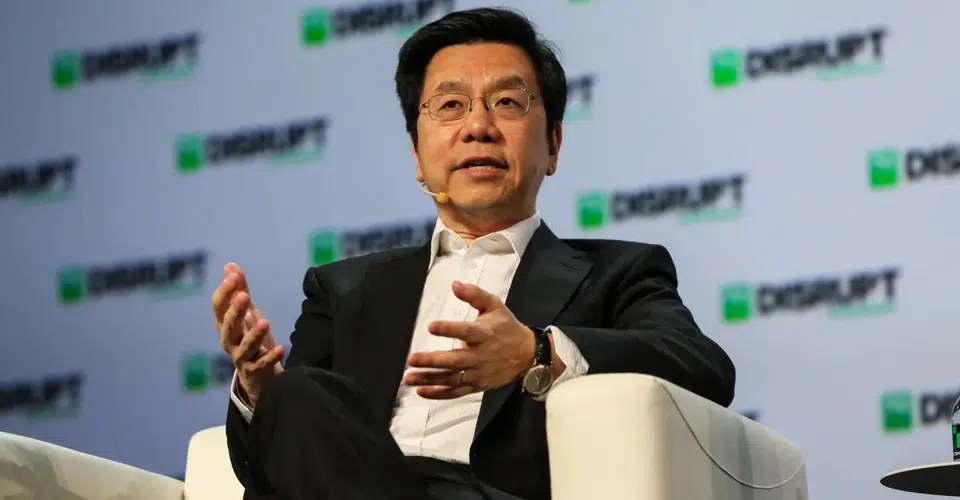
If data is the new oil, then China is the new Saudi Arabia.
🇹🇼 Taiwanese
Dr. Kai-Fu Lee is a Taiwanese-born AI expert and one of the most prominent figures in AI in Asia. With a PhD in AI from Carnegie Mellon, he pioneered early speech recognition research and went on to lead Microsoft Research Asia and Google China, nurturing a generation of AI talents in the 2000s.
Kai-Fu Lee later founded Sinovation Ventures, a venture capital firm investing in AI startups in China and abroad, bridging Silicon Valley and Beijing tech ecosystems. He is the bestselling author of “AI Superpowers”, which compares the AI development trajectories of the US and China and outlines AI’s societal impacts.
Lee now works as an investor and advocate for applying AI to real-world problems like healthcare and education.
In 2023 he also founded 01.AI, the company behind the open-source Yi large language models, which reached unicorn status in its first year. By 2025 the company had scaled back its own large-model pre-training to focus on enterprise AI solutions.
- Linkedin: Kai-Fu Lee
- X (Twitter): @kaifulee
12. Timnit Gebru
🇪🇹 🇺🇸 Ethiopian-American
Timnit is a computer scientist who has become a leading advocate for ethical AI and algorithmic fairness. With a background at Stanford AI Lab (she co-authored a seminal paper on bias in facial recognition that revealed how AI misclassified darker-skinned women), she joined Google and co-led its Ethical AI team.
In 2020, Gebru’s controversial departure from Google (after raising concerns about the risks of large language models) made global headlines and showed issues of diversity and ethics in tech. She has since founded the Distributed AI Research Institute (DAIR), focusing on community-rooted AI research outside Big Tech.
Timnit’s work spans technical research on AI bias, significant writings, and advocacy. She speaks about the social consequences of AI and the need for inclusivity.
Her influence shows in the growing field of AI ethics and the numerous initiatives now examining data practices, bias, and power in AI.
- Linkedin: Timnit Gebru
- X (Twitter): @timnitGebru
13. Daphne Koller
🇮🇱 🇺🇸 Israeli-American
Dr. Daphne Koller is a computer scientist who has made her mark both in academia and industry. A former Stanford professor, she built her reputation on probabilistic graphical models and co-authored the textbook “Probabilistic Graphical Models.”
Daphne co-founded Coursera in 2012, alongside Andrew Ng, reshaping online education and bringing machine learning courses to millions. After Coursera, she turned her expertise toward biomedicine by founding Insitro, a company that uses machine learning for drug discovery and development.
Koller applies AI to hard problems in education and healthcare, showing the impact AI experts can have far outside the lab. She has received numerous honors (including a MacArthur Fellowship) and continues to be a role model for women in tech.
In her current role as CEO of Insitro, she remains hands-on with AI-driven science while also advising and speaking globally on the future of AI and education.
- Linkedin: Daphne Koller
- X (Twitter): @DaphneKoller
14. Dario Amodei
🇺🇸 American
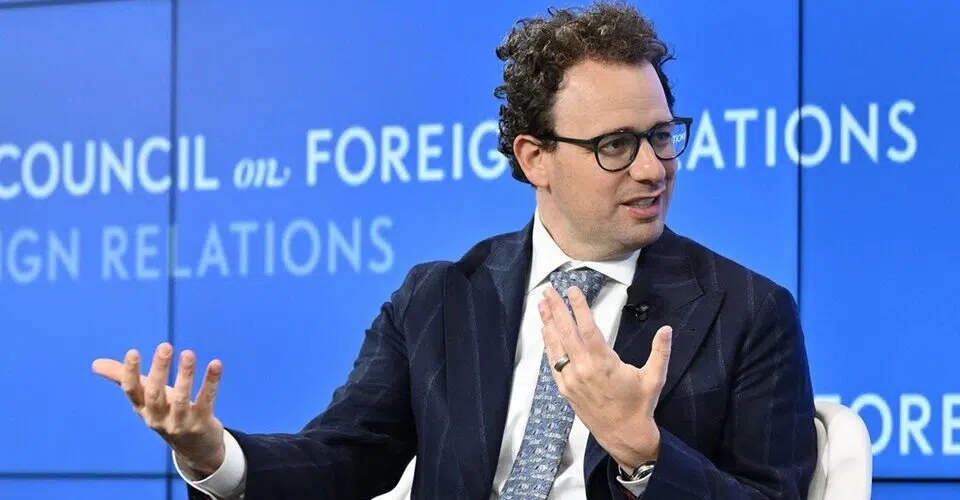
Dario is a physicist-turned-AI researcher who co-founded Anthropic, one of the leading AI startups focused on large language models and AI safety.
As CEO of Anthropic, Dario oversees the development of Claude, a rival assistant to ChatGPT, aiming to build helpful and harmless AI systems. He was previously VP of Research at OpenAI, where he worked on projects like GPT-2 and led the policy on publishing it responsibly.
Along with his sister Daniela, Dario started Anthropic in 2021 motivated by a vision of AI aligned with human values, and the company has since secured major investments (including from Google) to advance AI research with an emphasis on safety constraints. With a strong research background (he’s co-authored papers on topics from model interpretability to reinforcement learning from human feedback), Dario Amodei exemplifies an AI startup founder who still gets into technical details.
He is also a key figure in the broader conversation on AI governance.
- Linkedin: Dario Amodei
- X (Twitter): @DarioAmodei
15. Mira Murati

🇦🇱 Albanian
Mira is an engineer who served as the Chief Technology Officer at OpenAI before leaving in September 2024 to found her own startup, Thinking Machines Lab, in 2025. At OpenAI she led the teams that developed GPT-4, ChatGPT, and the DALL-E image generator.
Murati started her career in robotics (including product management on the Tesla Model X) before moving into AI research and product development. As one of the few high-profile female tech leaders in AI, she pairs technical acumen with a thoughtful approach to AI’s societal implications.
In 2023, Murati briefly held the interim CEO role at OpenAI during a key moment for the company, showing the trust placed in her leadership.
She continues to advocate for careful, inclusive development of AI and often represents OpenAI in media and conferences, discussing how to balance innovation with safety.
- Linkedin: Mira Murati
- X (Twitter): @miramurati
16. Mustafa Suleyman
🇬🇧 British
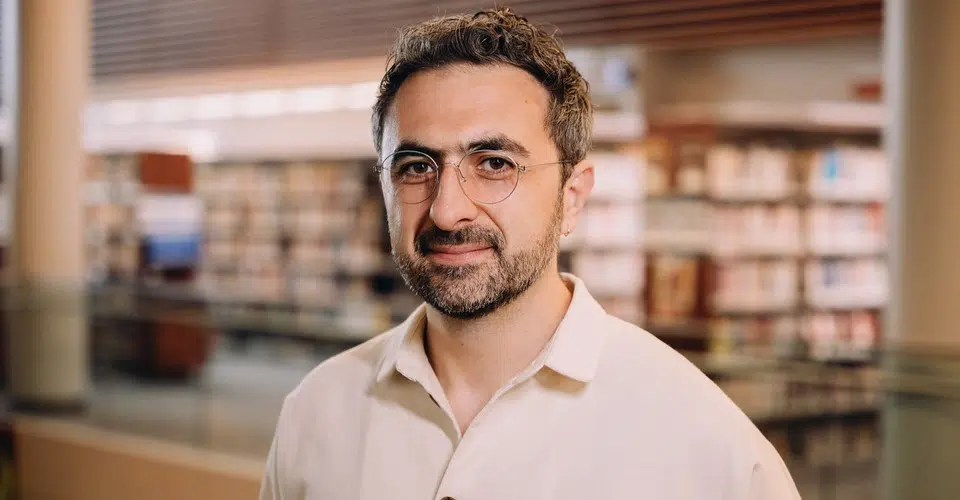
Mustafa is a British entrepreneur and AI policy expert who co-founded DeepMind in 2010 with Demis Hassabis. At DeepMind, Suleyman led the Applied AI division, translating research breakthroughs into real-world impact (like health diagnostics), and later became Google’s VP of AI Policy.
In 2022, he co-founded Inflection AI, whose assistant Pi offered an emotionally intelligent chatbot. In March 2024 he joined Microsoft as CEO of Microsoft AI, initially overseeing consumer products such as Copilot. Following a 2026 reorganization he leads the company’s superintelligence and frontier-model efforts.
Mustafa also shapes the AI ethics and governance debate: he joins global forums on AI regulation and co-authored the 2023 book “The Coming Wave”, which explores the impacts of AI and how society should prepare.
With a career spanning hands-on tech to high-level strategy, Suleyman remains a key figure shaping the future of AI in both industry and policy realms.
- Linkedin: Mustafa Suleyman
17. Abhishek Thakur
🇮🇳 Indian
Abhishek is a machine learning engineer and data science influencer best known as the world’s first Quadruple Kaggle Grandmaster. Originating from India and now based in Europe, he earned grandmaster status in Kaggle’s competitions, kernels, discussions, and datasets categories, demonstrating both elite skill and a commitment to sharing knowledge.
Abhishek has worked in industry (including a role at Hugging Face leading AutoML tooling) and in 2023 he founded Arcee AI, focusing on simplifying AI integrations.
He’s the author of the popular book “Approaching (Almost) Any Machine Learning Problem”, which is praised for its practical guidance. On his YouTube channel and blog, Abhishek posts tutorials, coding demos, and insights from his competition experience, making advanced techniques accessible to the community.
He stays active on social media, where he combines hands-on tips with a passion for community-building in AI.
- Linkedin: Abhishek Thakur
- X (Twitter): @abhi1thakur
- Github: abhishekkrthakur
18. Gabriel Lazaro
🇪🇸 Spanish
Gabriel is the Executive Vice President leading the Global Digital Insurance business at Chubb, overseeing digital strategy and innovation across more than 50 markets in APAC, EMEA and LATAM.
He is a vocal advocate for human‑centred AI, emphasizing augmentation rather than replacement, as he argues in his LinkedIn post “Human with AI, not Humans vs. AI” where he argues that AI is accelerating human creativity and urges professionals to lean into the tools through curiosity and experimentation.
His AI‑focused activities reflect a broader mission: to integrate cutting‑edge digital technology into insurance operations without losing the emotional intelligence and human connection that distinguish customer experience.
- Linkedin: Gabriel Lazaro
19. Oriol Vinyals
🇪🇸 Spanish
Oriol is a computer scientist and a leading AI researcher known for his work on deep learning and reinforcement learning. After studying mathematics and telecommunications engineering in Barcelona and earning his PhD at UC Berkeley, Oriol co-developed key algorithms in AI: he was a co-author of the 2014 paper on Sequence-to-Sequence learning, which enabled breakthroughs in machine translation and natural language processing.
He joined DeepMind in London, where he led the team that created AlphaStar, the first AI to defeat top professional players in the real-time strategy game StarCraft II.
Now a VP of Research and Gemini technical lead at Google DeepMind, Vinyals is among the leaders in large-scale neural network research (including efforts on large language models and multimodal AI). Researchers respect him for blending theoretical insight with ambitious engineering, and his contributions continue to influence how AI systems learn complex sequences and behaviors.
- Linkedin: Oriol Vinyals
- X (Twitter): @OriolVinyalsML
20. Yoshua Bengio
The race to develop frontier AI is accelerating faster than safeguards can keep up, posing major risks to democracy and our societies.
🇨🇦 Canadian
Yoshua is a computer scientist whose work helped define deep learning as a practical approach, especially for representation learning in neural networks. He is a professor at Universite de Montreal and a key figure in the Montreal AI ecosystem.
In 2025, Mila (Quebec AI Institute) announced a leadership transition where Bengio moved into a “Founder and Scientific Advisor” role, while the institute began recruiting its next permanent scientific director.
In parallel with research, Bengio has shifted his focus to the safe development of frontier AI, publishing long-form technical and conceptual arguments about risk, incentives, and guardrails. His public work tends to be concrete, discussing specific failure modes, evaluation needs, and why governance has to keep pace with capability gains.
A 2018 A.M. Turing Award laureate (with Geoffrey Hinton and Yann LeCun), he launched the nonprofit LawZero in 2025 to advance safe-by-design AI.
- Linkedin: Yoshua Bengio
- X (Twitter): @Yoshua_Bengio
Wrap Up
These experts represent exceptional talent, and headhunting them is a long shot. However, thousands of other skilled IT professionals are available to hire with our help. Contact us, and we will be happy to discuss your hiring needs.
Note: We’ve dedicated significant time and effort to creating and verifying this curated list of top talent. However, if you believe a correction or addition is needed, feel free to reach out. We’ll gladly review and update the page.